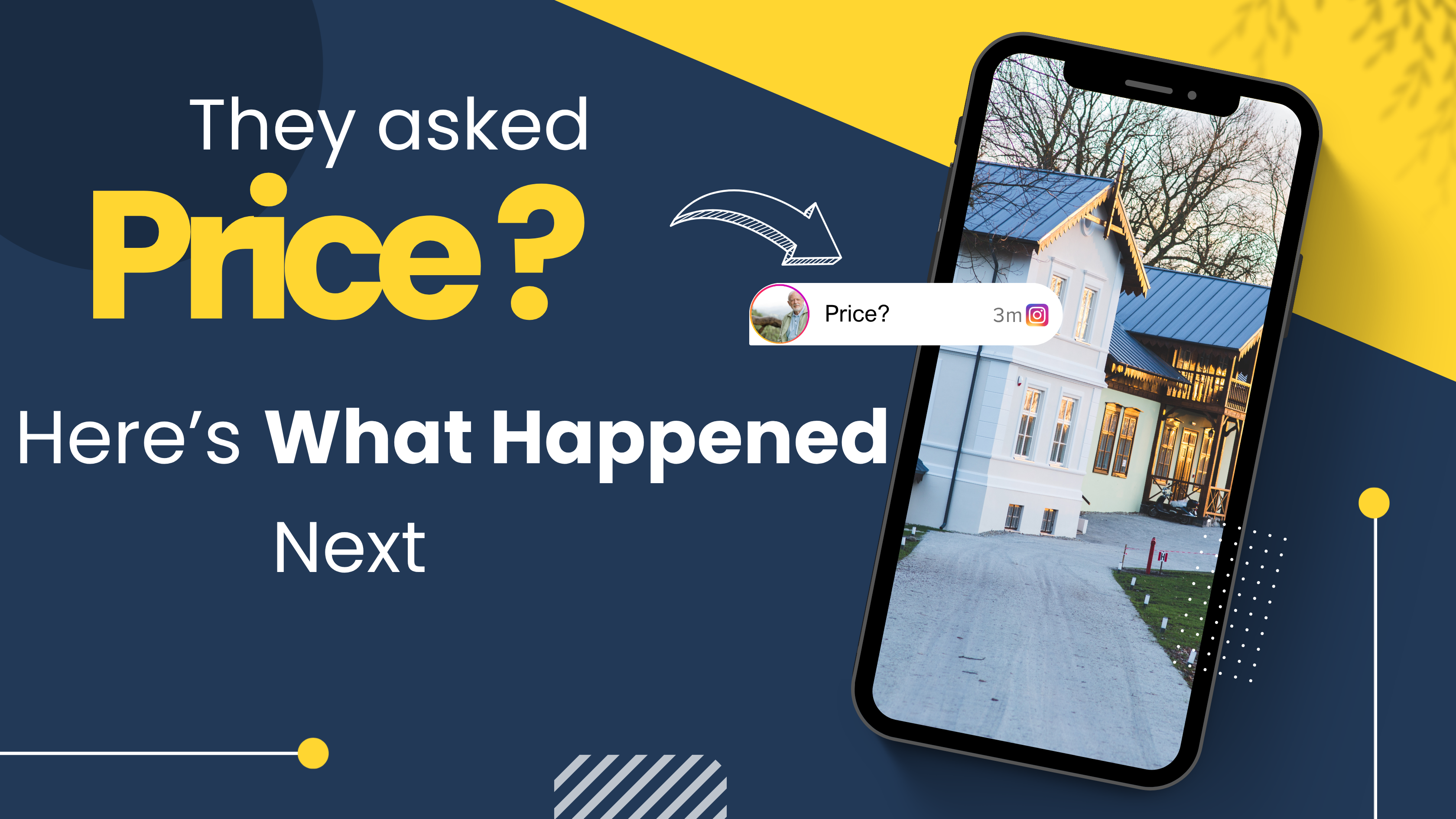

We Followed a Customer From “Price?” to Purchase
They asked “Price?” — Here's What Happened Next.
Let's follow a customer.
We'll call her Maya.
She's scrolling through Instagram when she sees a Reel from an online fashion store featuring a new outfit.
She likes it.
She watches the Reel again.
Then she comments:
“Price?”
It takes her two seconds to type.
But for the business, this could be the beginning of a valuable sales conversation.
What happens next can determine whether Maya buys the product, keeps considering it, or moves on to another brand.
So let's follow the journey.
Step 1: The Customer Shows Interest
Maya didn't simply watch the Reel.
She took action.
That matters.
A view tells the brand:
“Someone saw this.”
A comment like “Price?” tells the brand:
“Someone wants more information.”
She's now entered the consideration stage.
The problem?
She probably isn't going to wait forever.
If the business responds tomorrow, the moment may already be gone.
So the first goal is simple:
Respond while the interest is fresh.
Step 2: The First Response
Instead of making Maya wait for someone from the team to see the comment, an automated workflow responds.
Public reply:
“Hey! Sending you the details in DM 💬”
Then, almost immediately:
DM:
“Hey Maya! 👋 The outfit you asked about is ₹2,499. You can check it out here: [Product Link]”
Now Maya has what she asked for.
No:
“Check our bio.”
No:
“We'll get back to you.”
No waiting.
Just a direct answer.
But this is where many businesses make a mistake.
They assume the conversation is over.
It isn't.
Step 3: The Customer Asks Another Question
Maya clicks the product link.
She likes the outfit.
But she has one concern.
She replies:
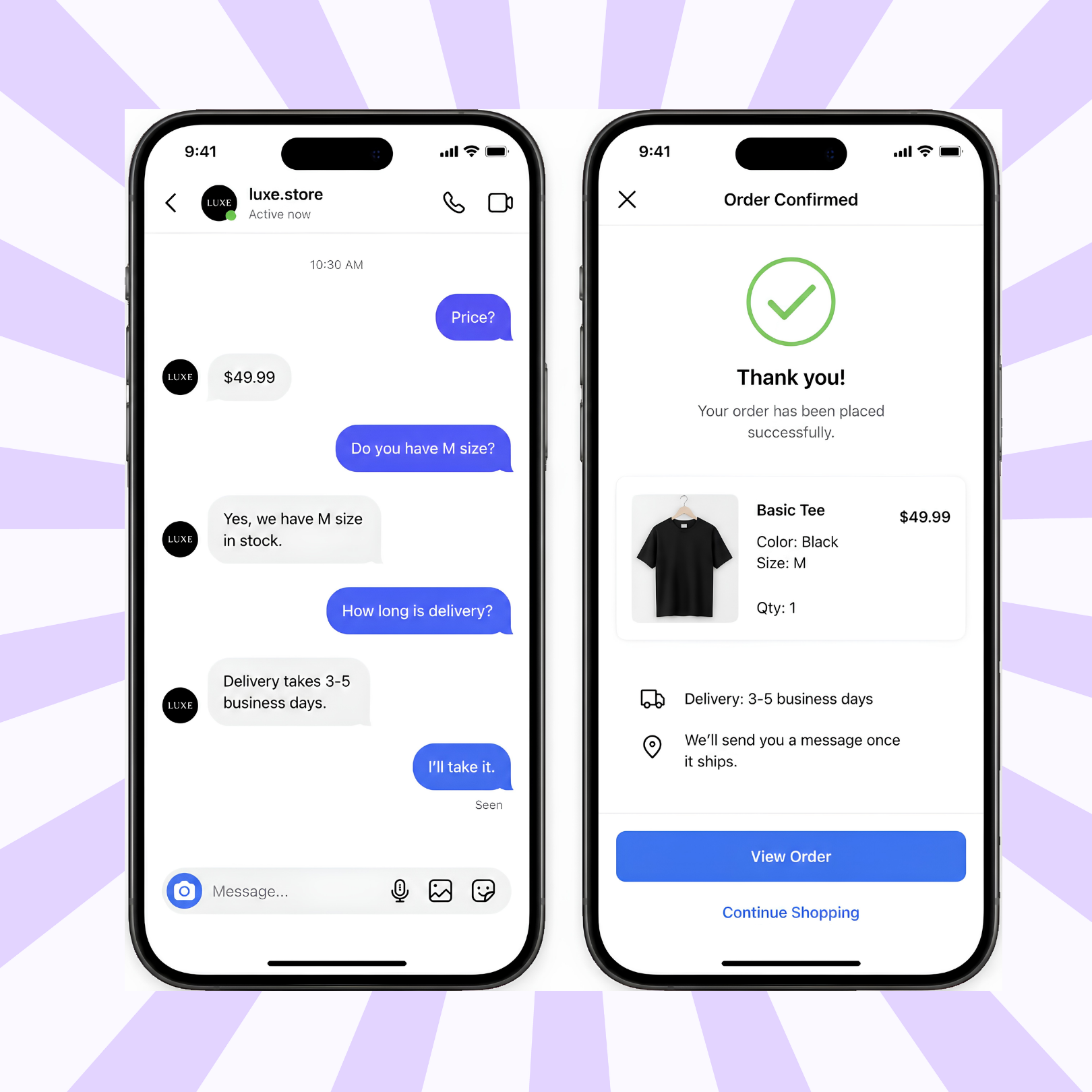
“Does it come in M?”
This is a critical moment.
She's not just browsing anymore.
She's evaluating whether she can actually buy.
A useful response might be:
“Yes! Medium is currently available. 😊 Want me to also send you the size guide?”
Maya replies:
“Yes please.”
Now the conversation is doing something important.
It's removing friction.
Step 4: The Brand Helps Instead of Selling
The size guide is sent.
Maya looks at it.
She asks:
“Is the fit oversized?”
Instead of sending another generic sales message, the brand answers the actual question:
“It's a relaxed fit, but not fully oversized. If you're between two sizes, we'd recommend sizing up.”
That's useful.
And that's the difference between selling at someone and helping someone buy.
The conversation isn't:
“BUY NOW! BUY NOW! BUY NOW!”
It's:
Question → Answer → Confidence → Next step
Step 5: The Customer Is Still Hesitating
Maya likes the product but isn't ready to purchase immediately.
She asks:
“How long does delivery take?”
The business provides the information.
“Delivery usually takes 3–5 business days depending on your location.”
Now another barrier has been removed.
Notice what happened.
Maya didn't need a discount.
She didn't need another advertisement.
She needed answers.
This is why Instagram conversations can be valuable during the buying journey.
Customers often aren't saying:
“Convince me to buy.”
They're saying:
“Help me feel confident enough to buy.”
Step 6: The Customer Moves Closer to Purchase
Maya now asks:
“Is COD available?”
Another common purchase question.
The automated workflow can provide the relevant information:
“COD is available in eligible locations. You can check availability at checkout.”
At this point, Maya has received answers to her main concerns:
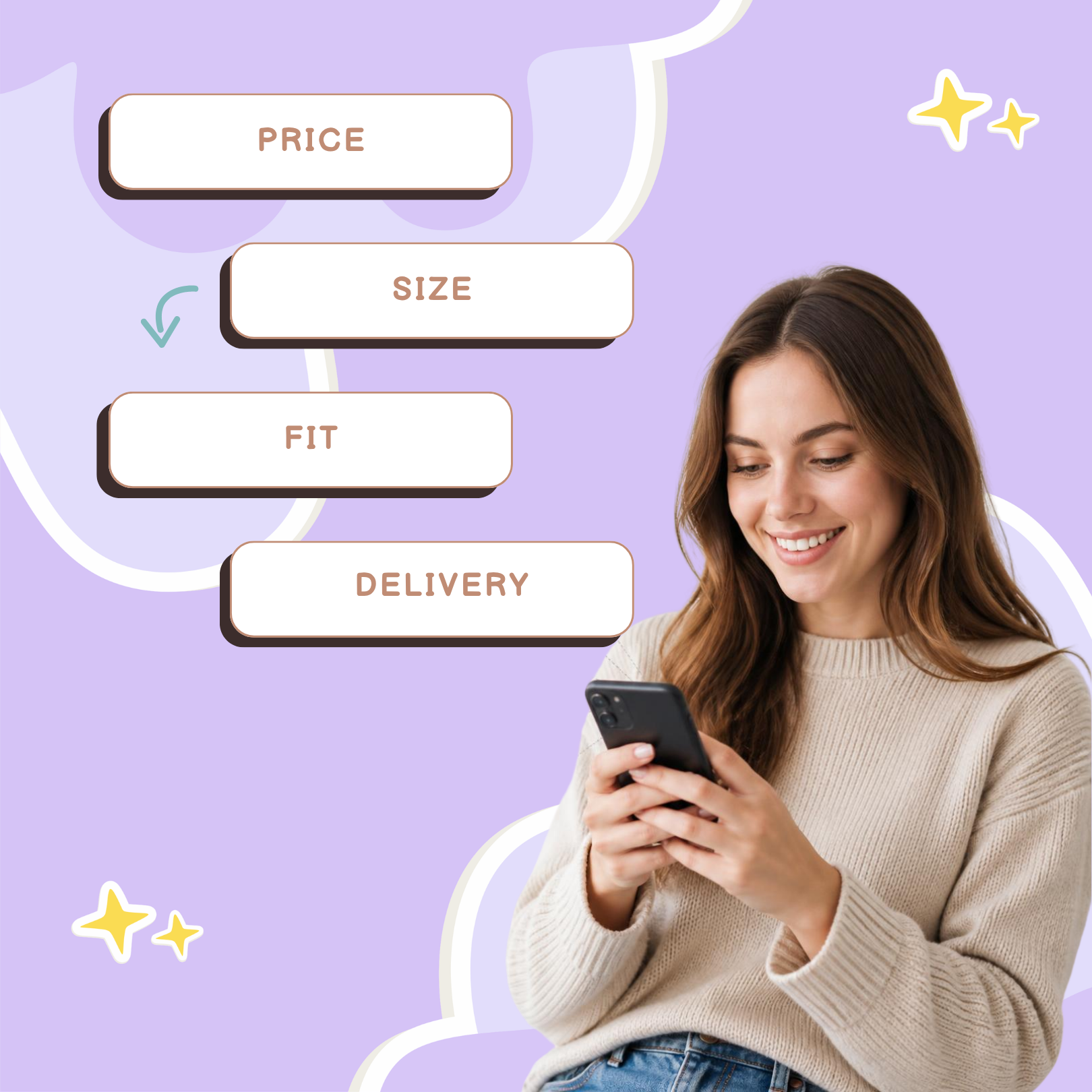
Price ✓
Size ✓
Fit ✓
Delivery ✓
Payment ✓
She's no longer trying to figure out whether the product makes sense.
She's deciding whether to purchase.
That's a very different stage of the conversation.
Step 7: The Human Takes Over
Now imagine Maya asks something unusual:
“I need this for an event next Saturday. Can you confirm whether it will reach me before then?”
This isn't necessarily something automation should answer blindly.
The business may need to check her location, inventory, and delivery timelines.
So the conversation can move to a human team member.
The team member replies:
“Absolutely! Let me check the delivery timeline for your location.”
A few minutes later:
“Yes, we can get it to you before Saturday.”
Now Maya has the reassurance she needed.
This is where human + automation becomes more powerful than either one alone.
Automation handles the predictable questions.
The human handles the situation that requires judgment.
Step 8: The Purchase
Maya goes back to the product page.
She selects:
Size: M
Quantity: 1
Payment: COD
And places the order.
The journey started with just one word:
“Price?”
But behind that one comment was a series of questions.
And every answer moved Maya one step closer to purchase.
What Actually Made the Difference?
It wasn't one magical sales message. It was the combination of several small things.
- Speed: Maya didn't have to wait hours for basic information.
- Relevance: The responses answered the questions she was actually asking.
- Convenience: She didn't have to search through the website for every answer.
- Personalization: The conversation adapted as her questions changed.
- Human Support: When the question became more specific, a team member stepped in.
The Real Sales Funnel Was Happening in the DMs
From the outside, Maya's journey looked simple:
Instagram Reel → Purchase
But underneath, it was:
Reel
↓
“Price?”
↓
Price information
↓
Size question
↓
Size guide
↓
Fit question
↓
Delivery question
↓
Payment question
↓
Human assistance
↓
Purchase
That's a sales funnel happening inside a conversation.
And this is why businesses shouldn't look at Instagram comments and DMs as separate from their sales process.
They can be part of it.
Where Automation Makes This Scalable
The problem is that Maya isn't your only customer.
Imagine receiving:
500 “Price?” comments
300 “Link?” comments
200 size questions
100 shipping questions
Manually handling every interaction would take enormous time.
Automation can take care of predictable steps.
For example:
“PRICE” → Send pricing.
“LINK” → Send product page.
“SIZE” → Send size guide.
“SHIPPING” → Send delivery information.
Then, when a customer asks something more complex:
Automation → Human handoff
This allows your team to spend less time copying and pasting the same information and more time handling conversations that genuinely need them.
How Flozari Fits Into the Journey
Flozari can help businesses automate the repetitive parts of this journey while keeping human support available when it's needed.
The goal isn't to turn every customer into a conversation with a bot. It's to make sure the right conversation happens at the right time.
- Comment Auto-Reply can respond to relevant comments and trigger conversations.
- Keyword Targeting can identify words such as “price,” “link,” “demo,” or “size.”
- DM Automation can send relevant information automatically.
- AI-Powered Replies can help handle more natural customer questions.
- Team Inbox allows human agents to take over conversations.
- Activity Analytics helps businesses understand how those interactions perform.
The Takeaway: A Purchase Often Starts With a Question
Maya didn't begin her journey by saying:
“I want to buy this.”
She simply asked:
“Price?”
That's how many customer journeys begin.
A question.
Then another question.
Then a little more confidence.
Then a decision.
Businesses often focus heavily on getting customers to their Instagram page.
But what happens after they show interest can be just as important.
If you can respond quickly, answer relevant questions, reduce friction, and bring in a human when necessary, a simple Instagram comment can become much more than engagement.
It can become the beginning of a sale.
Because sometimes, the journey from “Price?” to “Purchased” is only a few good conversations away.
Turn interest into action.
Guide every Instagram question toward the next useful step.
Build your customer journeyContinue reading
More Instagram automation guides

5–6 min read
10,000 Conversations. One Person. Impossible? Not Anymore.
Read article
4 min read
Built to Convert Conversations into Customers
Read article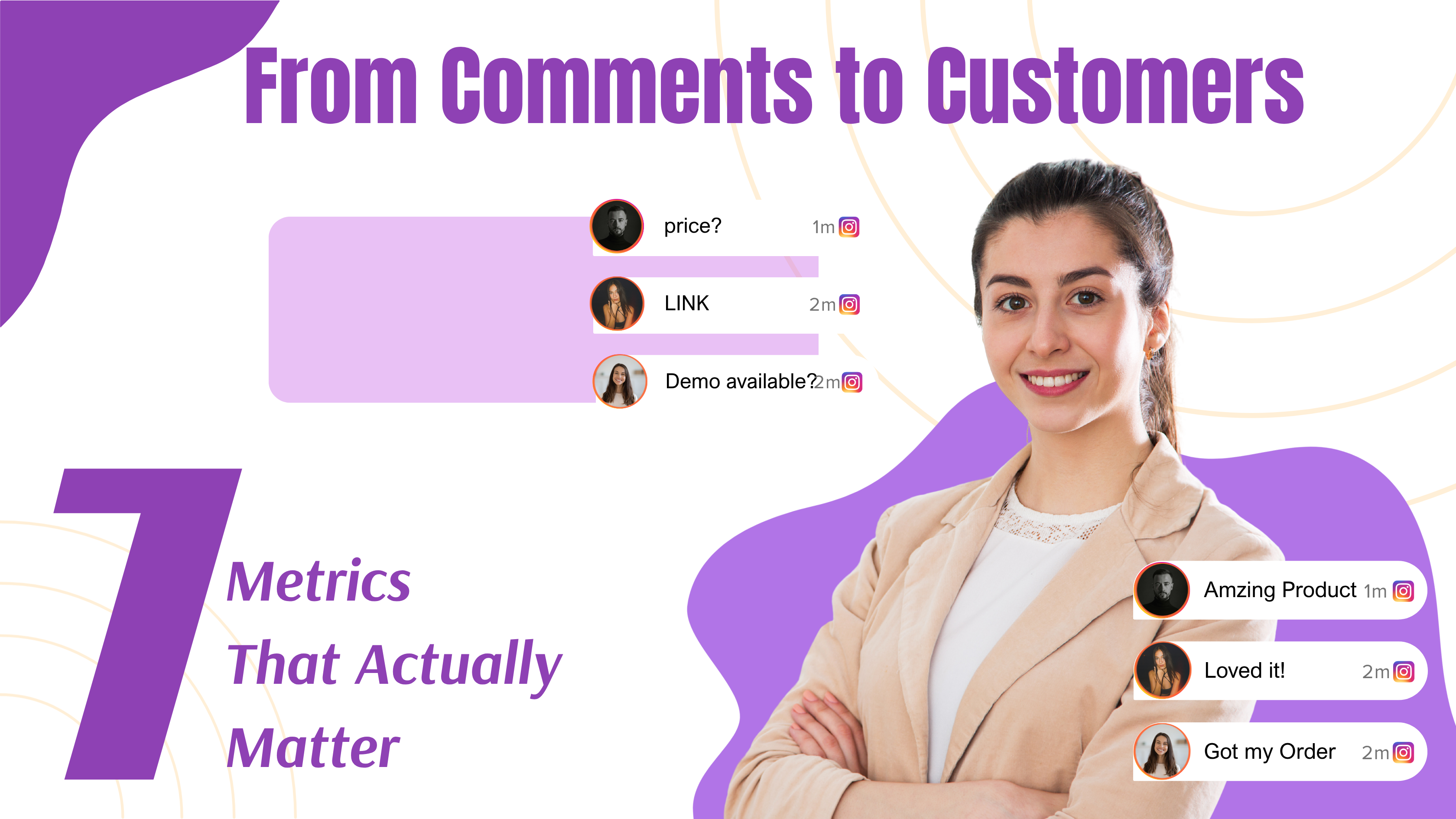
5 min read