

10,000 Conversations. One Person. Impossible? Not Anymore.
Imagine your Instagram post goes viral.
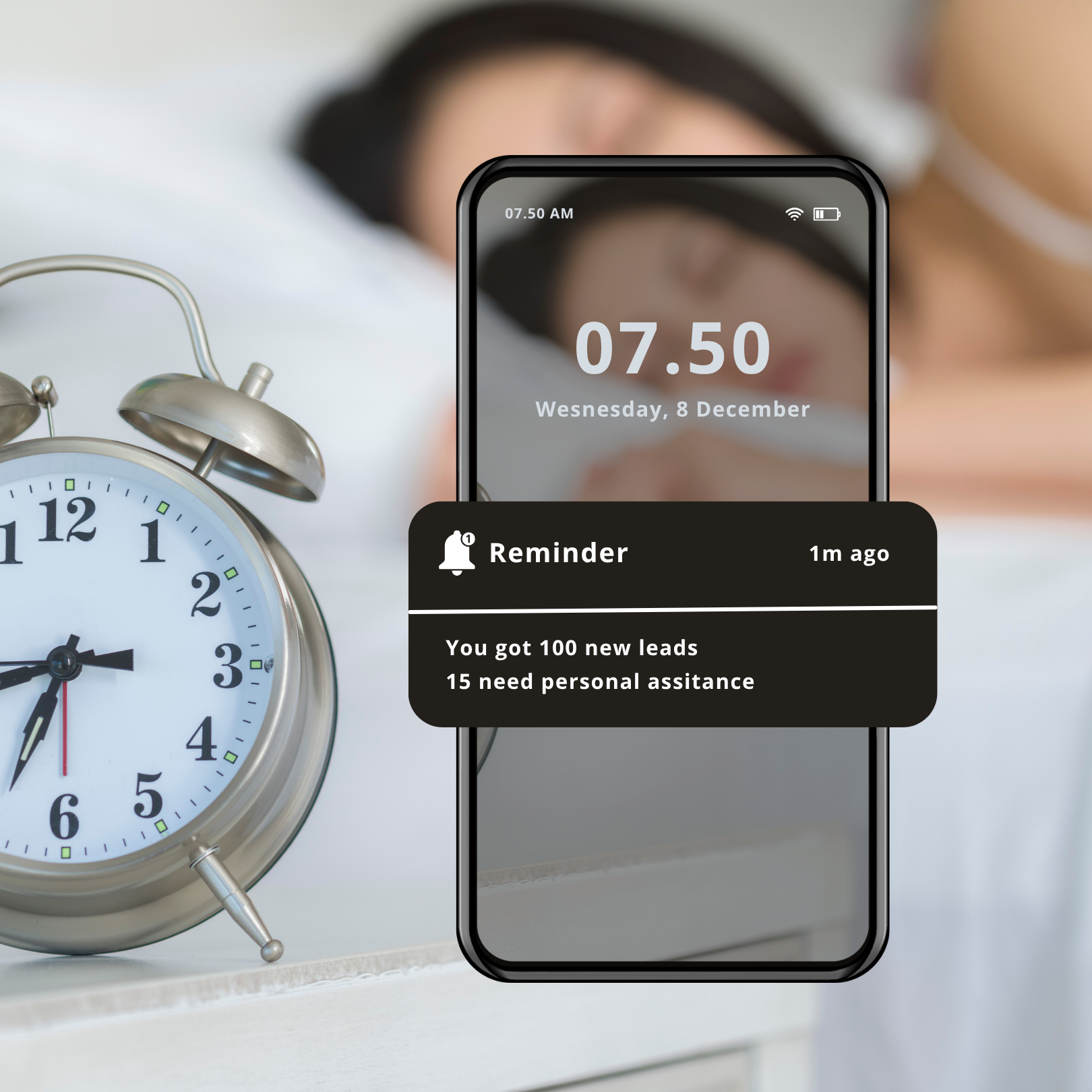
Instead of 100 comments, you wake up to 10,000 comments and DMs.
Some people want the price. Some want the link. Some ask about availability. Some want a demo. Some need help choosing a product. Others simply want to talk to your brand.
And now someone on your team has to respond.
If one person spends just 30 seconds handling each conversation, that's 10,000 × 30 seconds = 83+ hours.
That's more than two full workweeks for one person—and that's assuming every conversation takes only 30 seconds. Real customer conversations often take much longer.
So the real question isn't: “Can one person reply to 10,000 conversations?” It's: “Should one person have to?”
The Problem Isn't Your Team. It's the Volume.
When Instagram is small, manual replies work.
At 20 comments, it is easy. At 50, manageable. At 200, time-consuming. At 1,000, difficult. At 10,000, it is a completely different problem.
At that point, adding more effort isn't the solution. You need a system that can handle repetitive interactions without requiring a person to manually type every answer. That's where automation becomes valuable.
Not Every Conversation Needs a Human
This is one of the biggest mistakes businesses make when thinking about automation. They imagine two choices: a human replies to everything, or a bot replies to everything. Neither is ideal.
The smarter approach is: automation handles the predictable, AI handles the contextual, and humans handle the complex.
- “Price?” → Automation
- “Send me the link.” → Automation
- “Which plan would work for my business?” → AI-assisted response
- “My payment failed and I need help.” → Human
Think About Your 10,000 Conversations Differently
10,000 conversations sounds overwhelming. But they aren't necessarily 10,000 completely different conversations.
You might discover that a large share are repetitive: 2,500 ask for pricing, 2,000 want the product link, 1,500 ask about availability, 1,000 want a demo, 800 ask about shipping, 700 need product information, 500 require human assistance, and 1,000 are miscellaneous.
Suddenly, the problem looks different. And repetitive conversations are exactly where automation can help.

The Power of One-to-Many Automation
A human works sequentially: they answer Customer 1, then Customer 2, then Customer 3, then Customer 4.
Automation works differently. One workflow can respond to many customers at the same time.
For example: 100 people comment “PRICE” → 100 people receive the pricing DM → the team handles only the conversations that need additional help.
The business hasn't hired 100 people. It has created one workflow that can operate across hundreds of conversations. That's the scalability advantage.
AI Takes It One Step Further
Not every customer uses predictable keywords. Someone might ask: “I'm looking for something suitable for a small business with five employees. Which option should I choose?”
That's much more complex than “PRICE”. AI-powered replies can help handle these more natural conversations by understanding context and generating relevant responses.
But AI shouldn't necessarily handle everything. If the customer asks something sensitive, unusual, or requiring a decision from your team, the conversation can be handed over to a human. The goal is not maximum automation; it is the right level of automation.
Your Team Should Handle Conversations That Actually Need Them
Imagine your team spends the entire day answering: “Price?”, “Link?”, “Where can I buy?”, “Do you ship?”, and “What's your size guide?” Those questions may be important, but they are also repetitive.
Now imagine automation handles those first questions. Your team can spend its time on complex customer questions, high-value leads, complaints, negotiations, product recommendations, sales conversations, and relationship building.
That's a much better use of human attention.
What Does a Scalable Instagram Conversation System Look Like?
Think of it as a funnel.
Level 1 — Automation: handles simple, repetitive questions.
Level 2 — AI: handles contextual conversations and common follow-up questions.
Level 3 — Human: handles complex or high-value conversations.
Level 4 — Conversion: purchase, booking, signup, or qualified lead.
This creates a system where not every customer needs the same amount of human effort. That's how a small team can support a much larger audience.
How Flozari Helps Scale Instagram Conversations
Flozari is designed to help businesses manage Instagram conversations without making every interaction a manual task. Together, its tools create a system where your team isn't trying to manually keep up with Instagram—the system helps keep up with the audience.
- Comment Auto-Reply: Automatically respond to relevant Instagram comments.
- Keyword Targeting: Trigger different workflows based on words such as PRICE, LINK, DEMO, GUIDE, or BOOK.
- DM Automation: Send relevant information based on customer actions.
- AI-Powered Replies: Handle more natural, context-based customer questions.
- Team Inbox: Give your team a shared space to manage conversations that require human involvement.
- Sentiment Analyzer: Help identify whether conversations are positive, negative, questions, or potential spam.
- Activity Analytics: Track how your automated conversations are performing.
The Goal Isn't to Manage 10,000 Conversations
Here's the bigger lesson: you shouldn't build a business where one person has to personally manage 10,000 conversations. You should build a system where 10,000 conversations don't feel like 10,000 manual tasks.
Automation absorbs repetition. AI helps with context. Humans focus on what matters most. And analytics tells you what's working.
That's how businesses can scale their Instagram presence without scaling their workload at exactly the same rate.
Final Takeaway
So, can one person really manage 10,000 Instagram conversations? Not manually. And they shouldn't have to.
The smarter question is: how many of those conversations actually need a human? If hundreds of customers are asking the same basic questions, automation can handle the first response. If customers need contextual guidance, AI can help. If the conversation becomes complex or high-value, your team can step in.
That means one person doesn't have to reply to 10,000 people. They can manage the system that helps 10,000 people get the right response. And that's the real difference between working harder and scaling smarter.
Scale conversations, not manual work.
Let Flozari handle the repetitive first responses while your team focuses on the conversations that matter.
Start automating with FlozariContinue reading
More Instagram automation guides

4 min read
Built to Convert Conversations into Customers
Read article
5 min read
Instagram Comment Automation Benchmark 2026: 7 Metrics That Actually Matter
Read article
5 min read